mLabs:
Boost Post Feature
A new feature to help Facebook and Instagram users schedule and boost their posts at once.
challenge.
mLabs depended on Facebook’s Marketing Partner API, which at that time required at least $100,000 in ad spend intermediated through the platform. At the same time, users were increasingly requesting a Facebook Boost Post feature, which competitors already offered. The challenge was to create a solution that delivered clear value to users while also meeting critical business and platform requirements.
how we solved.
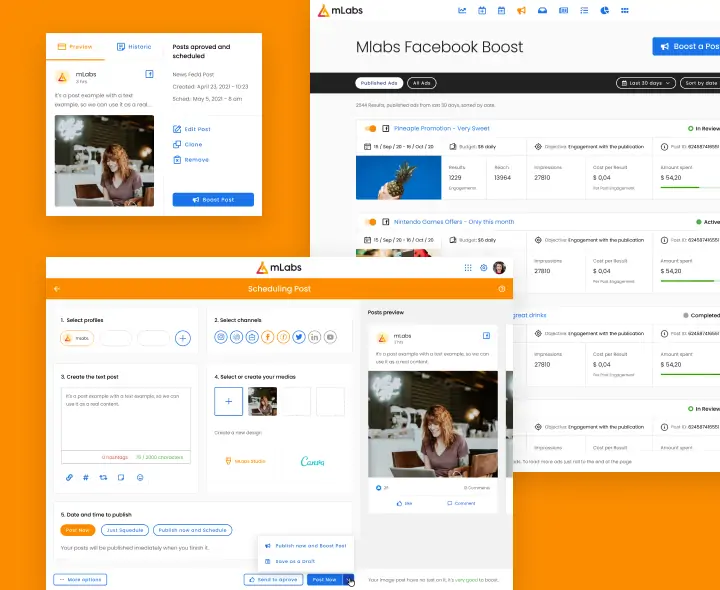
We designed a Boost Post feature that allowed users to schedule and boost posts in a simplified, integrated flow. After evaluating multiple directions, the team chose a cross-feature approach: a dedicated Boost Post section that could also be accessed from existing features such as Scheduling Post and Calendar. This minimized disruption to current workflows while enabling users to configure, launch, and track boosted posts in one cohesive experience.
results.
The Boost Post feature enabled mLabs to intermediate more than $100,000 in ad spend, meeting a key requirement for Facebook’s Marketing Partner API. Despite adoption by less than 5% of active users, the feature revealed clear behavioral patterns: 60% of boosted posts were created through the Scheduling Post flow, 40% via the dedicated Boost Post section, and 10% from the Calendar. The majority of users leveraging the feature were agencies (80%), while small businesses represented 20%, leading to strategic insights that ultimately positioned the Boost Post feature as part of the Agencies Plan.
activities.
User Research
User Interviews
Benchmarking
Wireframe
Information Architecture
Design System Application
High-Fidelity Prototyping
Usability tests
Handoff
Cross-functional Collaboration
Documentation
context.
The Company
mLabs is a Brazilian social media management platform that helps small businesses and agencies manage, publish, and analyze content across multiple social networks from a single place.
In 2020, mLabs faced a strategic challenge related to its partnership with Facebook. To maintain access to the Marketing Partner API, the company needed to intermediate at least $100,000 in ad spend. At the same time, users, especially agencies, were actively requesting a Boost Post feature already available in competing platforms.
My Role
I worked as a Senior Product Designer within a cross-functional team alongside a Product Manager, Tech Lead, and two developers. I led user research, designed user flows and interfaces aligned with the design system, and co-led product experiments from discovery through delivery.
The project ran for six months, from January to July 2020.
design process.
Discover
Researched user needs and business constraints through desk research, Facebook Ads documentation, and interviews with agencies and small businesses to understand demand for boosting posts and competitive gaps.
Define
Synthesized insights into a clear problem statement and hypothesis, evaluated solution options, and defined a cross-feature Boost Post approach aligned with user workflows and business goals.
Design
Designed user flows and high-fidelity prototypes using the existing design system, detailing how users would boost, configure, and track promoted posts across the platform.
Deliver
Aligned with engineering, QA, and marketing, then implemented and launched the feature with defined success metrics and tracking in place.
Results
The feature exceeded the ad spend target, with adoption mainly from agencies and most usage coming from the scheduling flow, informing future pricing and positioning decisions.
discover.
Context & Research Goals
The team knew users were asking for a Facebook Boost feature and competitors already offered it. There was a business requirement related to Facebook’s Marketing Partner API: mLabs had to intermediate $100,000 in ads to meet API launch criteria.
User & Market Research
Conducted desk research (studying Facebook Ads documentation and a growth marketing course).
User interviews with a diverse sample of small businesses and agencies (via Zoom, with audio recorded and insights logged).

Key Insights from Research
Users wanted to schedule and boost posts simultaneously, saving time.
Users who spent even a little on boosting tended to get better engagement/visibility.
Pain Points Discovered
No existing way to schedule and boost in one flow.
Users felt limited by the platform compared to competitors.
define.
Problem Statement
How might we create a Boost feature that lets users boost their posts directly within mLabs and helps the company intermediate more than $100,000 in ads within three months?
Hypothesis
Creating an mLabs Boost feature will increase user value and help meet the API requirement.

Exploration of Solutions
The team considered three possible directions:
A standalone Boost Post section (simple but wouldn’t integrate with user flow).
A boost option inside the existing Scheduling Post flow (better UX, but added complexity to tracking/Calendar).
A cross-feature approach with a dedicated Boost Post section that could tie into other areas like Scheduling and Calendar.
This was chosen!
Decision Criteria
Chosen solution balanced technical feasibility, business needs, and usability.
design.
Userflow
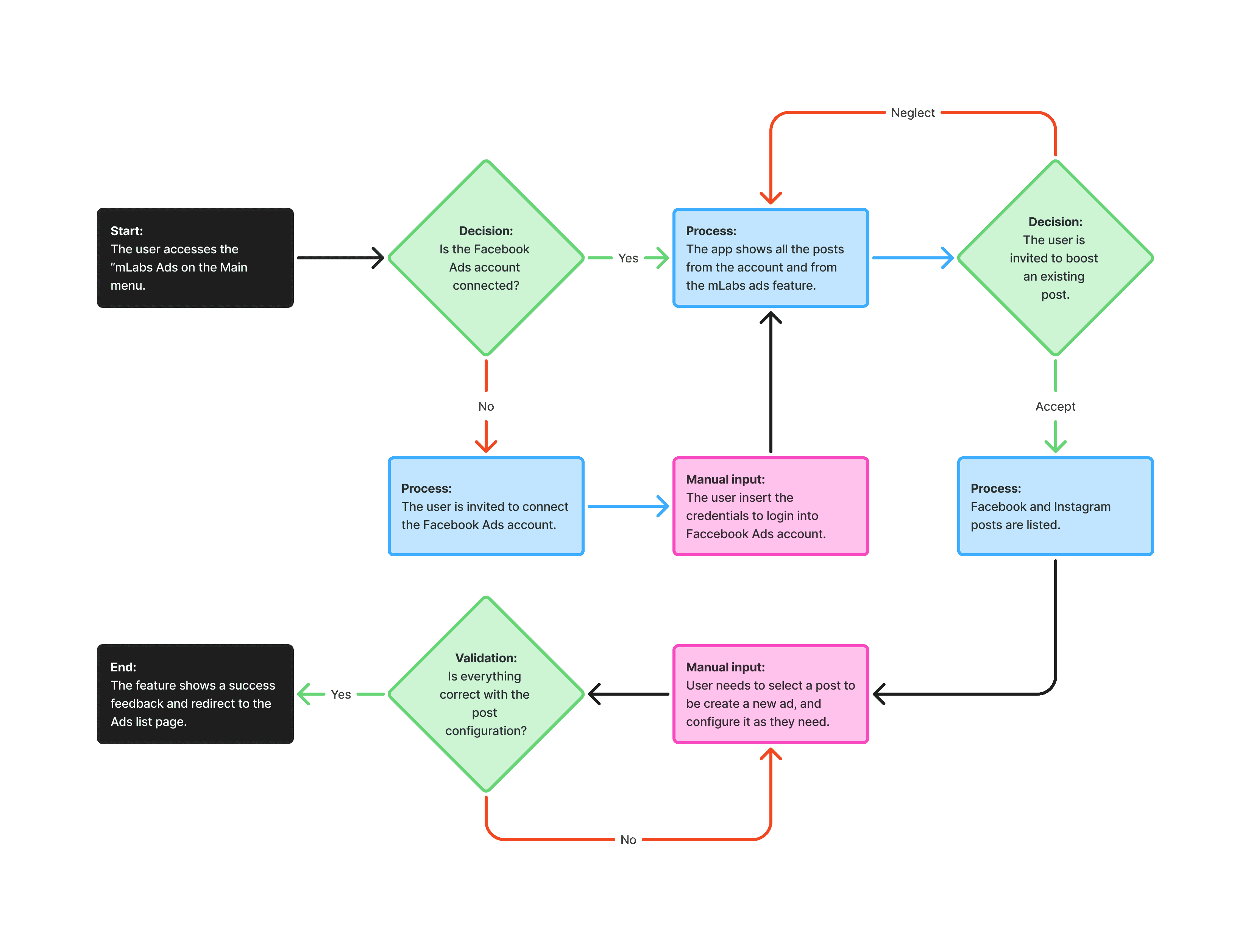
Designed a user flow diagram to map how users would navigate to and use the Boost feature.
Design System Integration
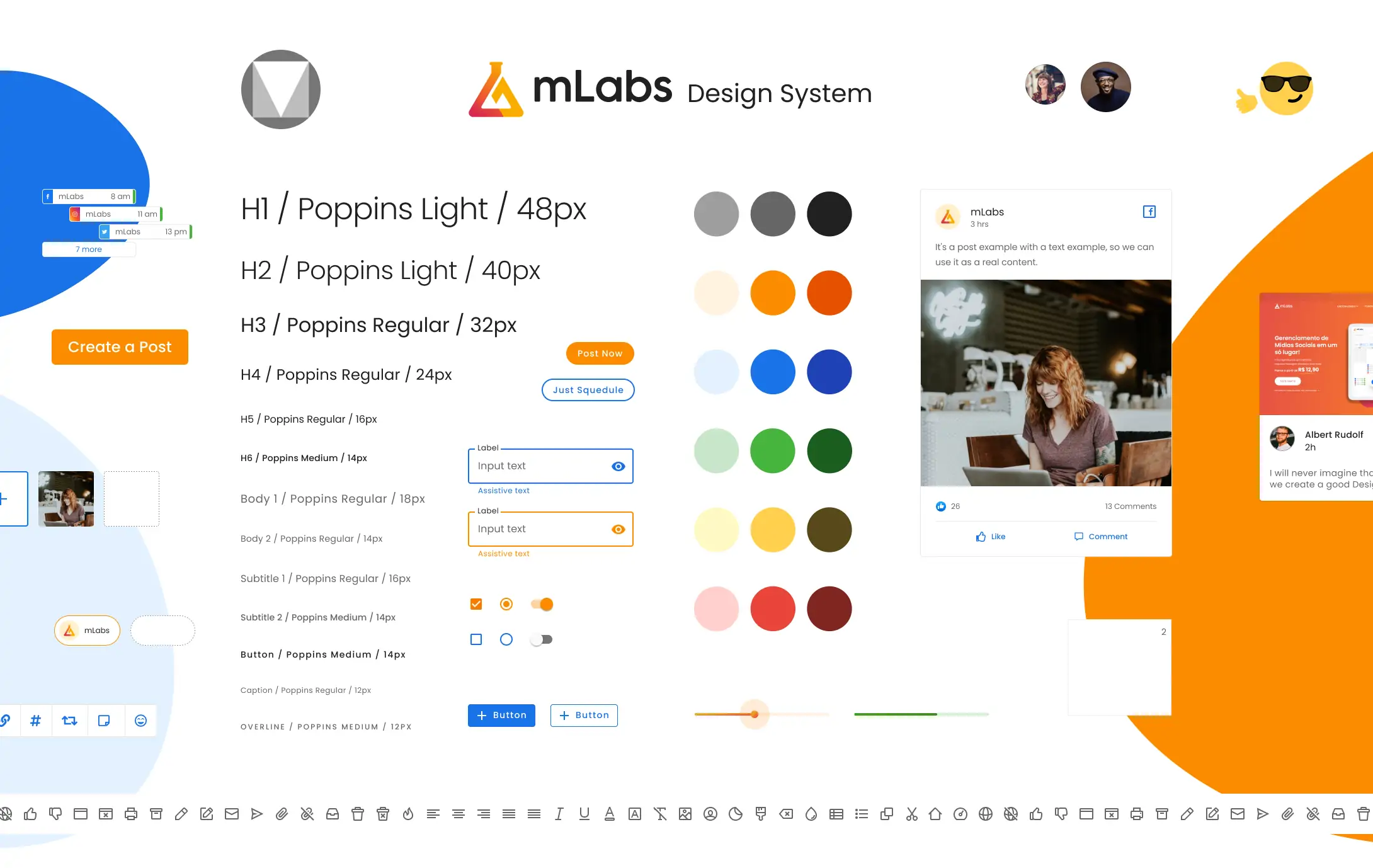
Worked within the mLabs Design System (based on Material Design) to ensure consistency with the platform.
Solution Prototyping
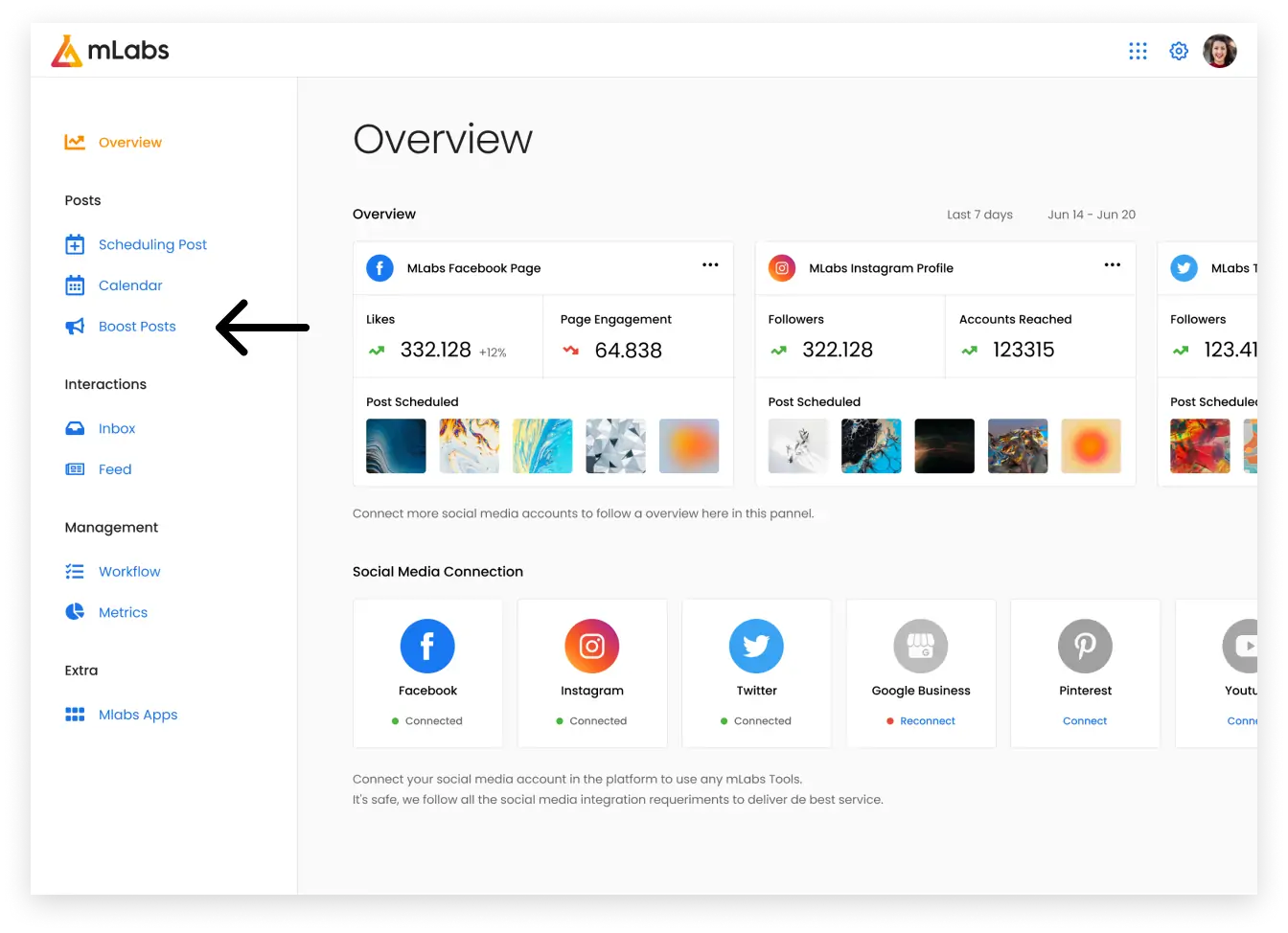
Created a high-fidelity interactive prototype in Figma to visualize screens and flows.
UI Highlights
Important interface elements included:
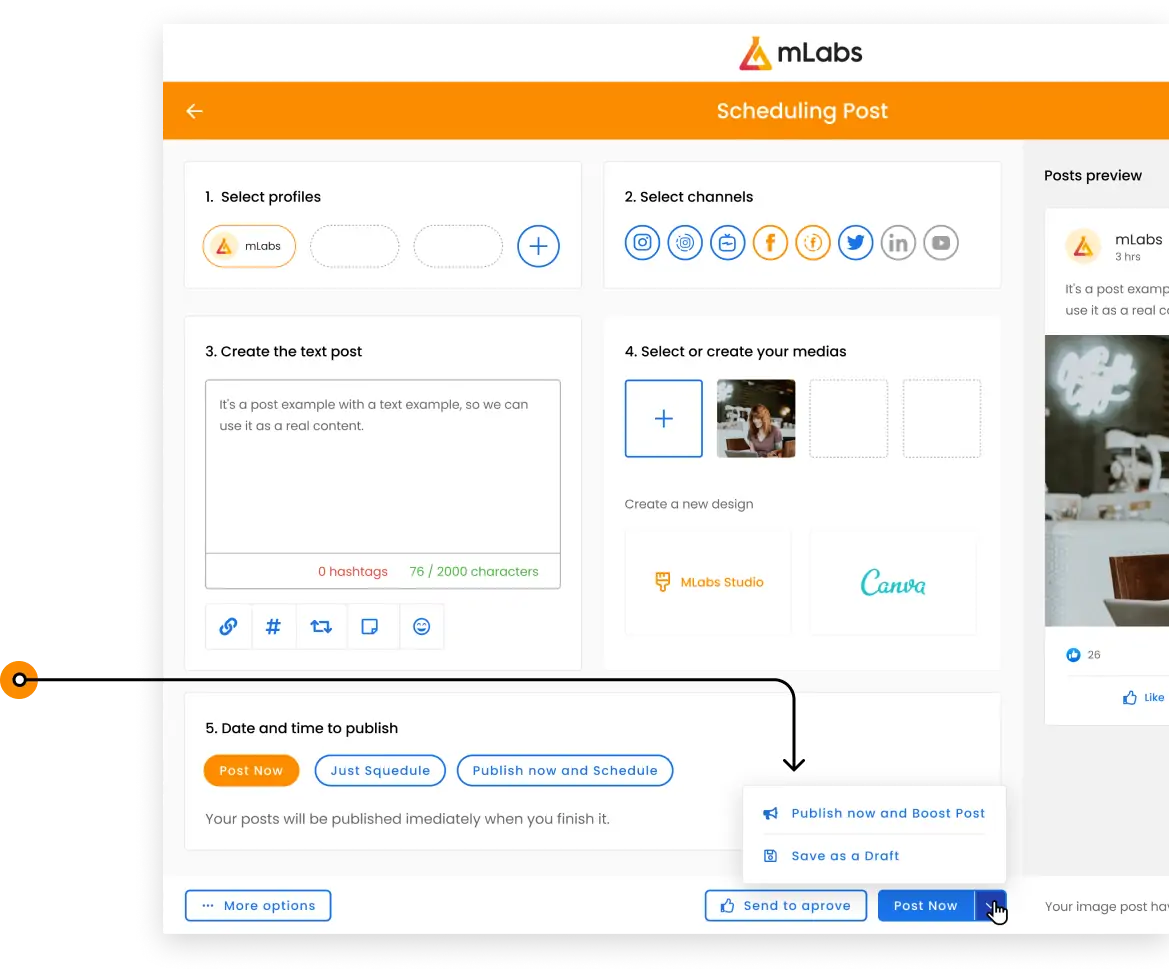
The Scheduling Post
The Scheduling Post is the most important and used feature on Mlabs and following what our users said on the discovery phase.
We create a way to continue their scheduling post-operation boosting their posts.
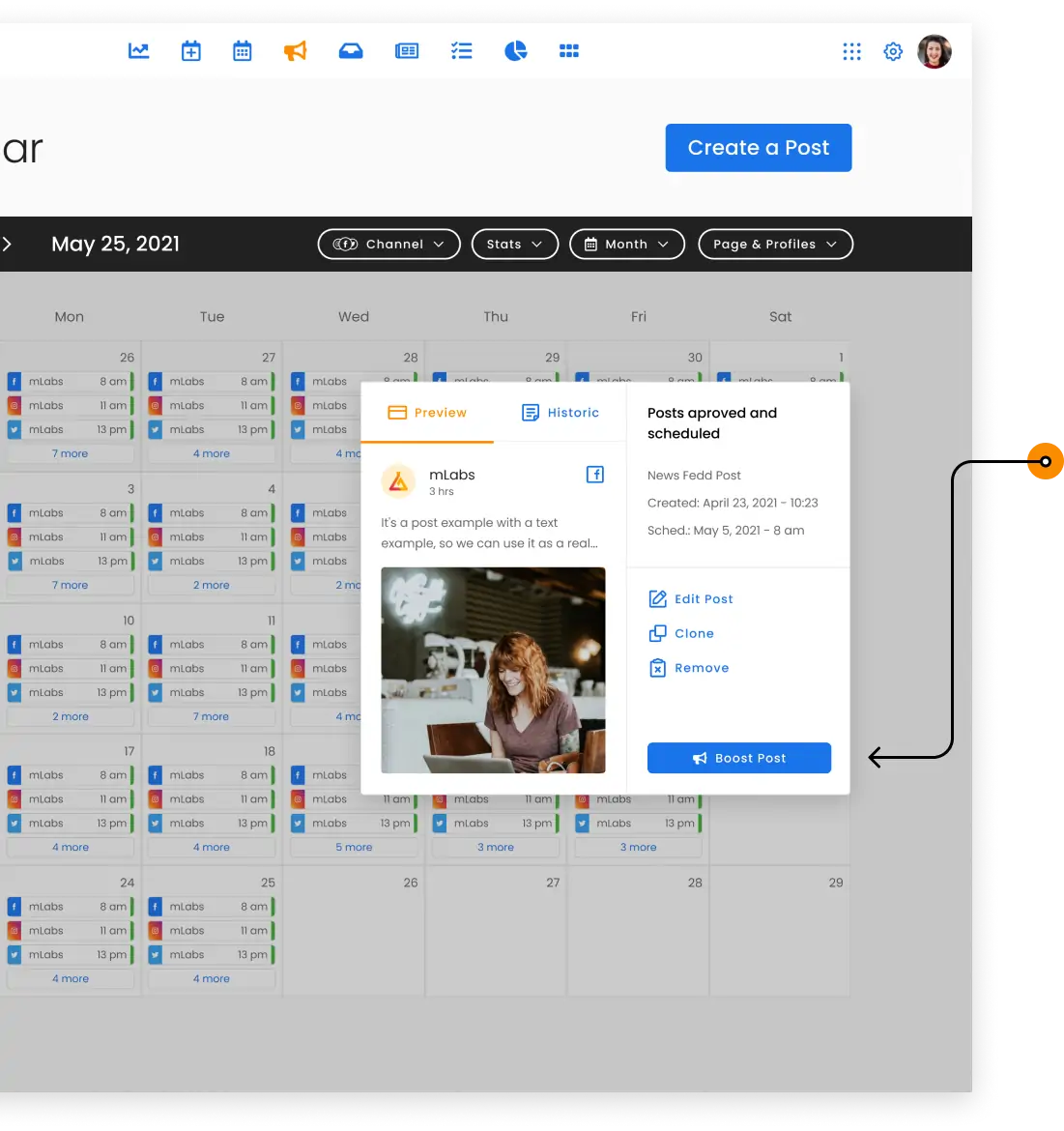
The Calendar
Another bet was the Calendar feature, where we also included the button Boost Post at the bottom.
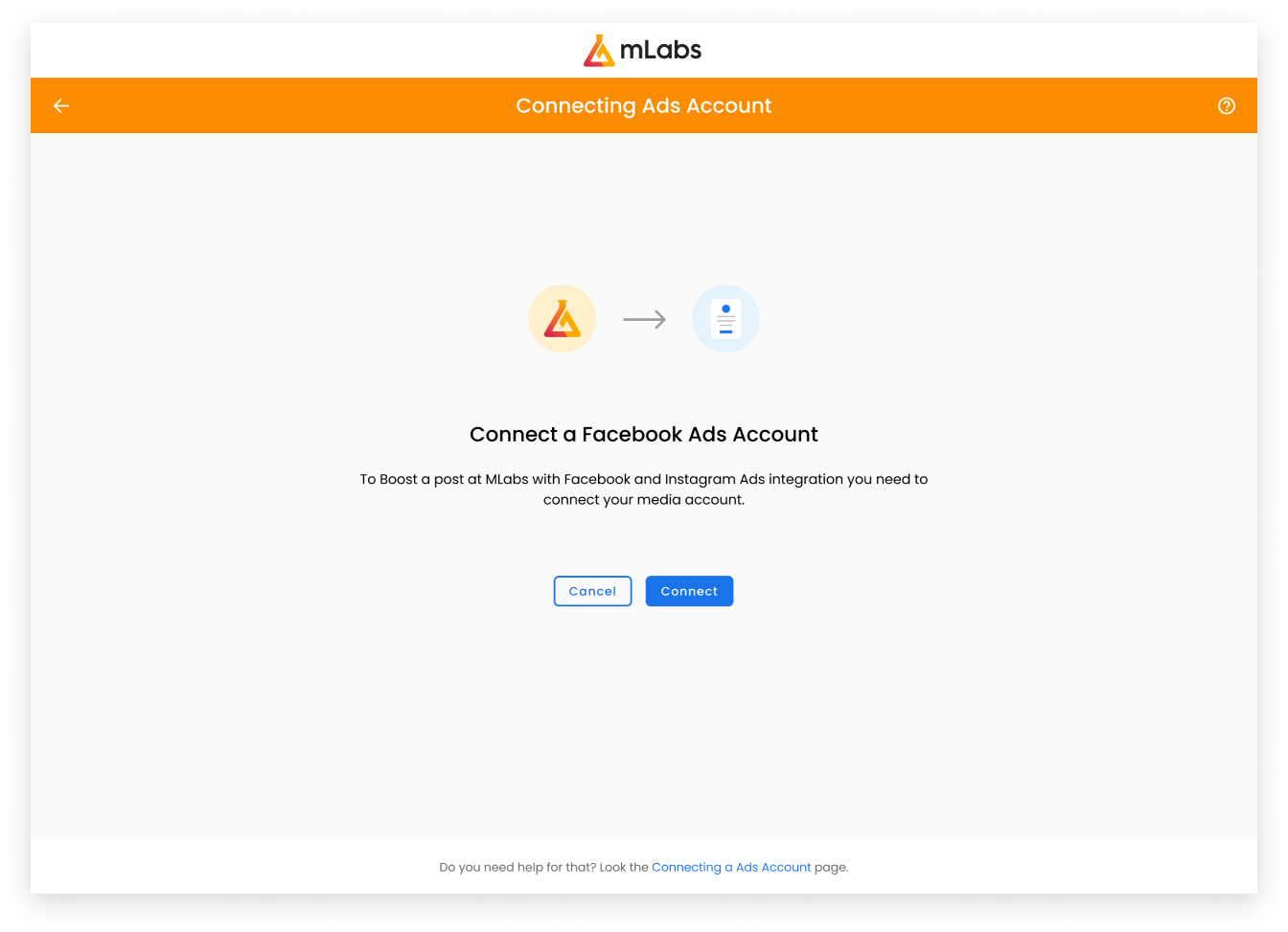
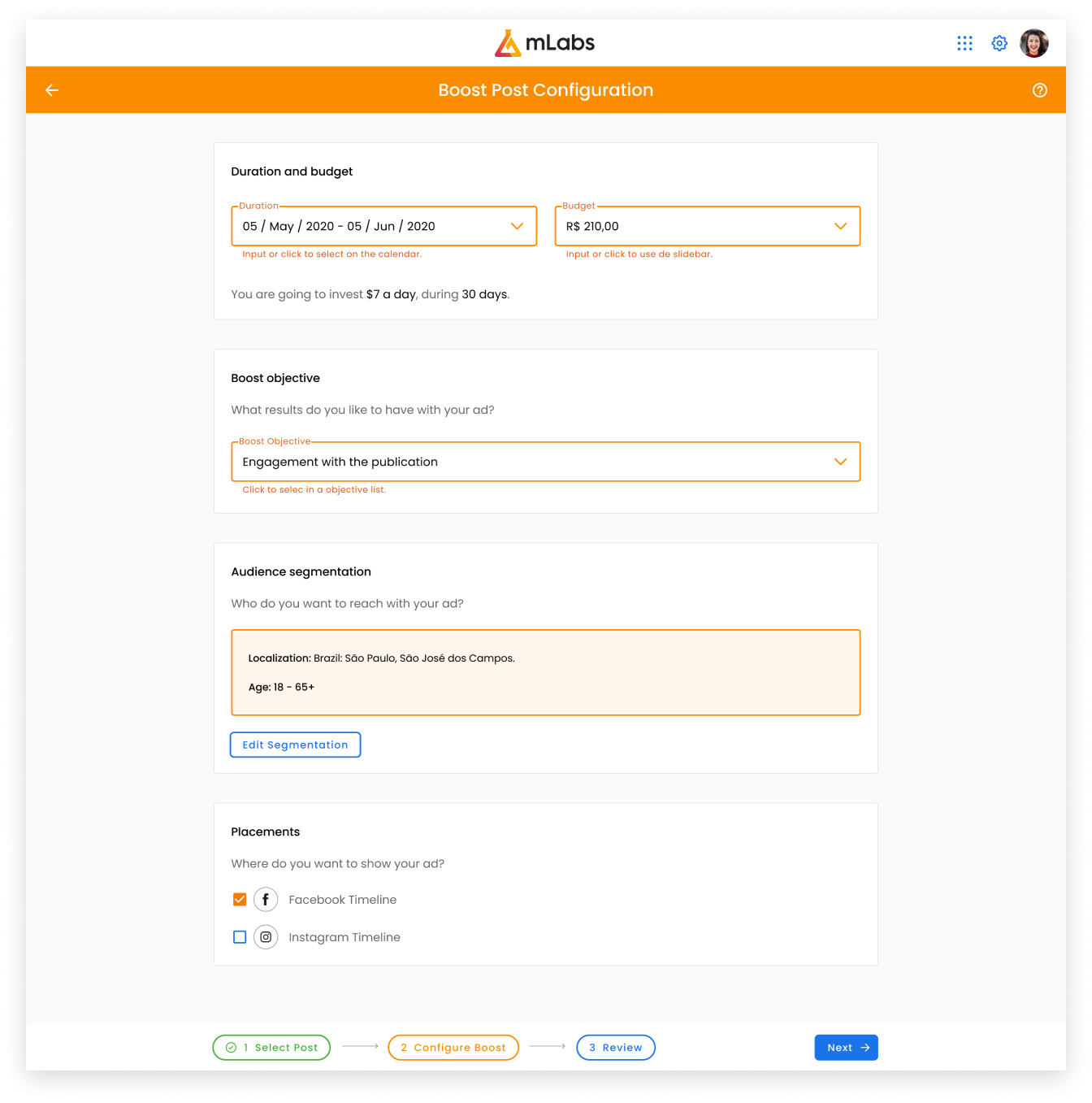
The pages of the main flow
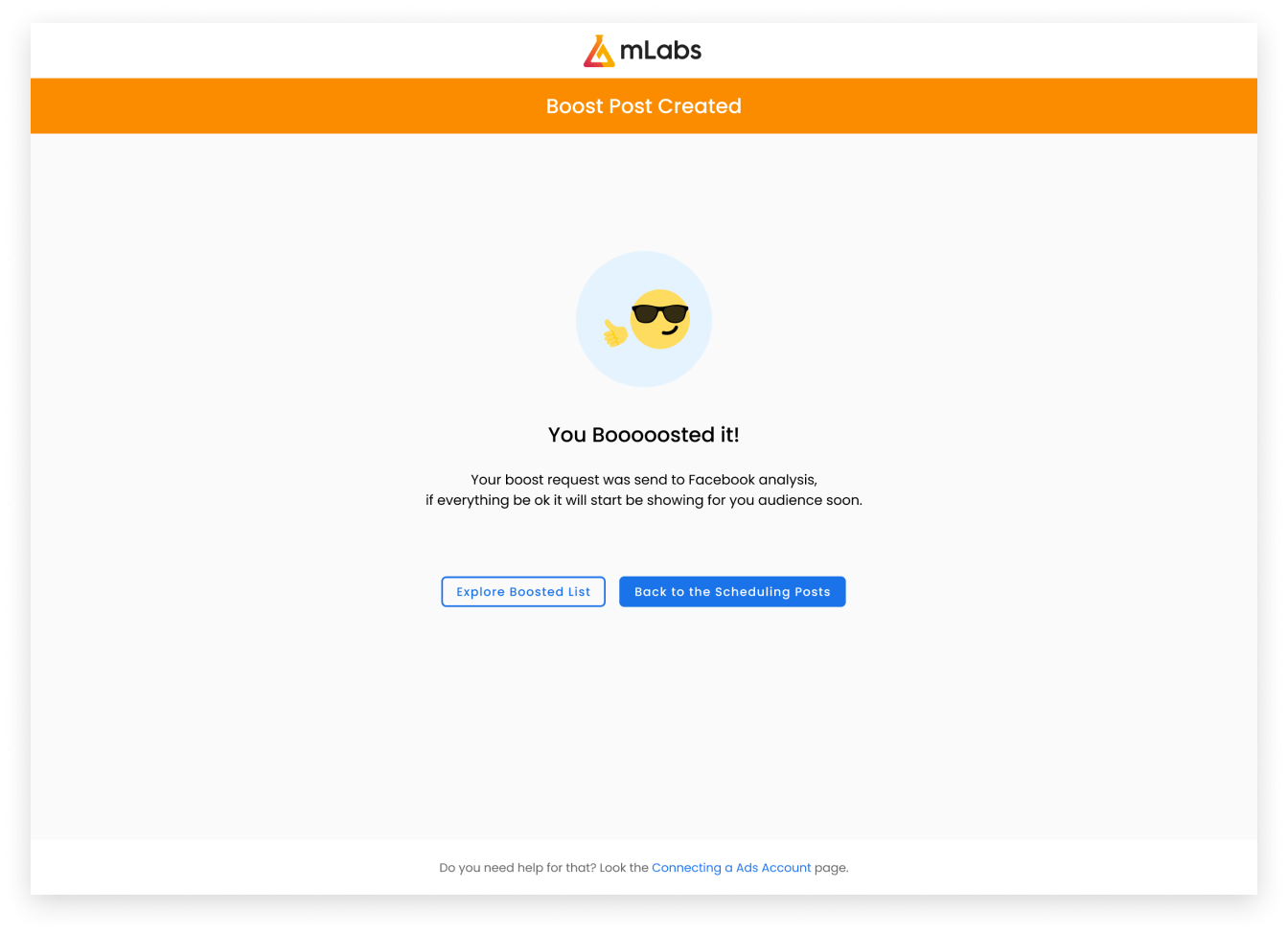
Connecting Facebook Ads account, boosting post configuration, and success feedback pages.
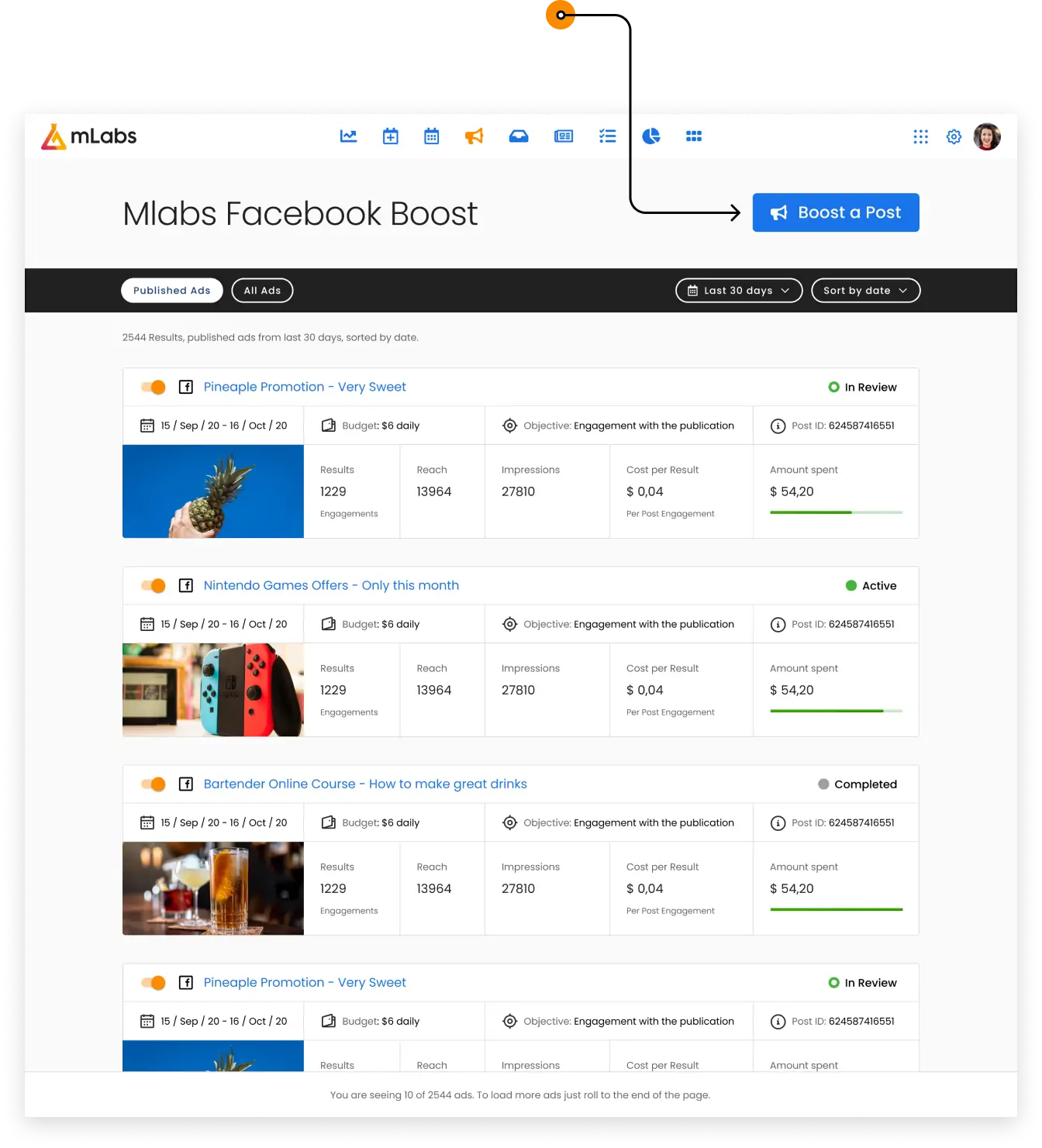
Boosted Post List that shows all the posts boosted.
On the feature page, before boost it, the users can follow their posts and also create a post selecting in a post list.
deliver.
Pre-Experiment & Alignment
Demo with developers and QA to align on implementation and metric tracking before launch.
Involved the marketing director to agree on how success would be measured and analyzed.
Launch & Rollout
Feature went into production; data was gathered to assess performance.

results.
Metrics Collected
Amount intermediated: over $100,000 in ads.
User adoption: Less than 5% of active users boosted posts.
Breakdown of where boosts came from:
60% via the Scheduling Post feature
40% via the main menu Boost feature
10% via Calendar feature
Boosting user types:
80% agencies
20% small businesses
Over $100k
Amount intermediated
80%
agencies
20%
small businesses
60%
via the Scheduling Post feature
40%
via the main menu
10%
via Calendar feature
Learnings & Next Steps
Adoption was lower than expected, with most usage coming from agencies.
Based on findings, the Boost feature later became part of an “Agencies Plan”, requiring users to pay extra to access it, aligning the offering with those who used it most.
thanks for reading.
I hope you enjoyed this case overview. While most of the project details are protected by a non-disclosure agreement (NDA), I'd be happy to discuss my role and contributions further in a live meeting. Check the contacts below and feel free to reach out.